
Le co‑pilote intelligent
qui booste le chiffre d'affaires
des agents immo.
Une seule app pour prospecter, estimer un bien, suivre vos dossiers et gérer vos contacts. Fait par des agents immo, pour des agents immo.
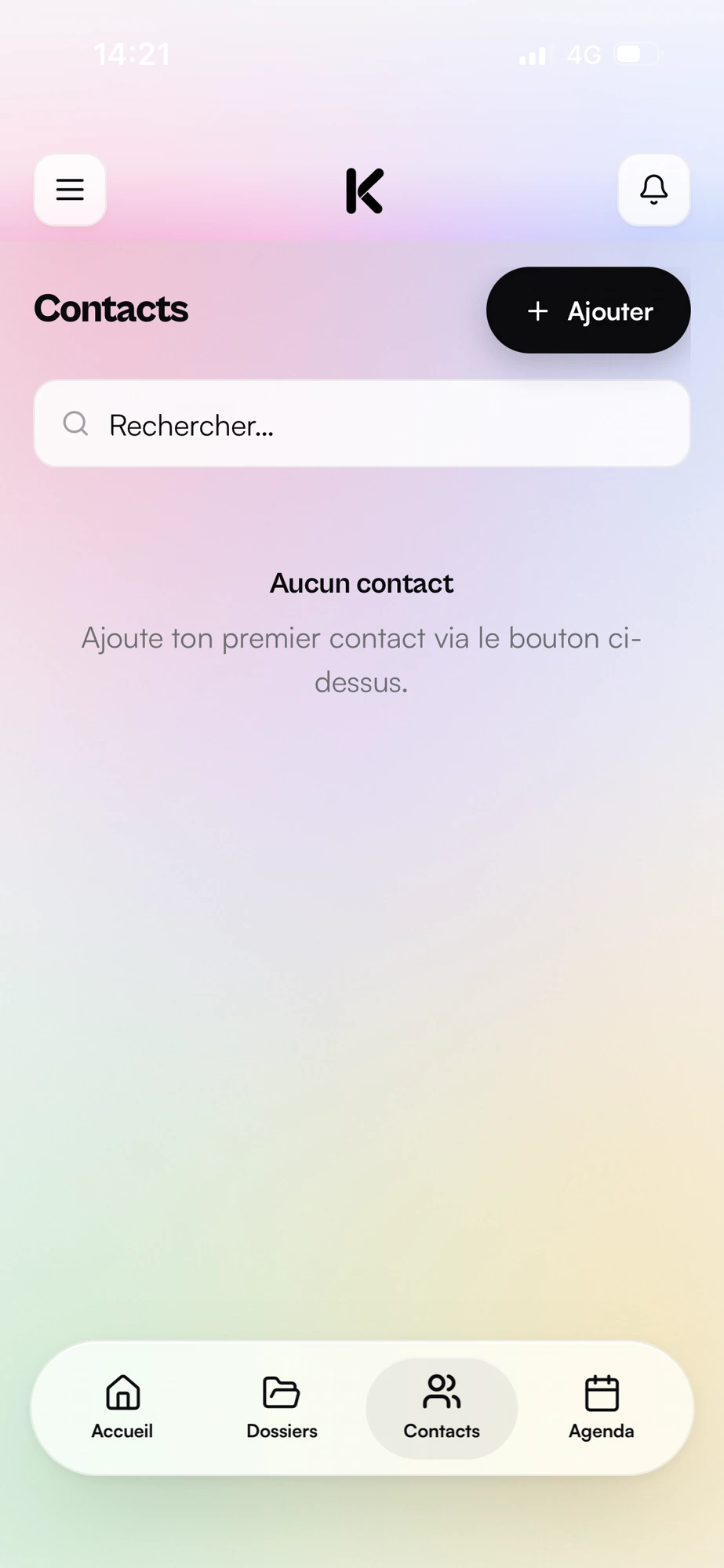
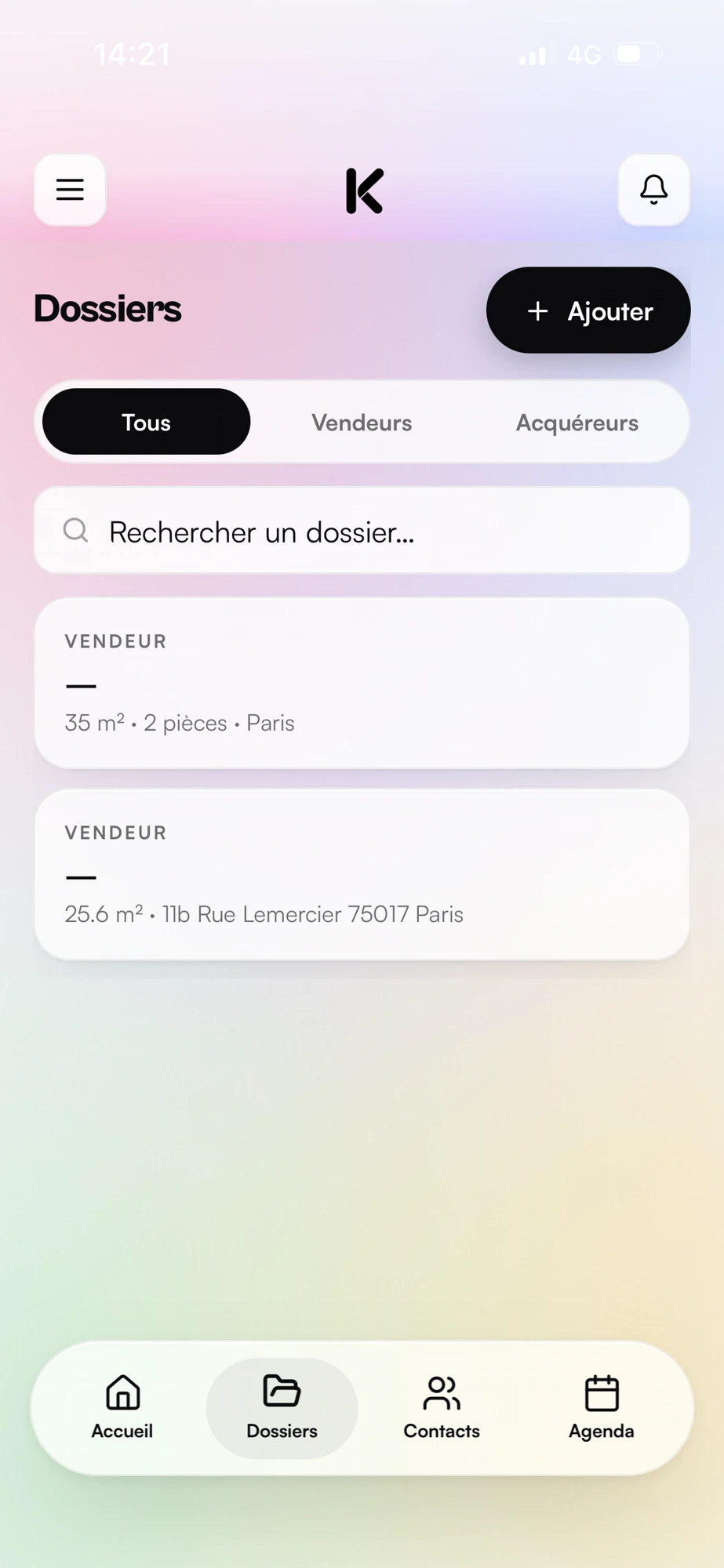
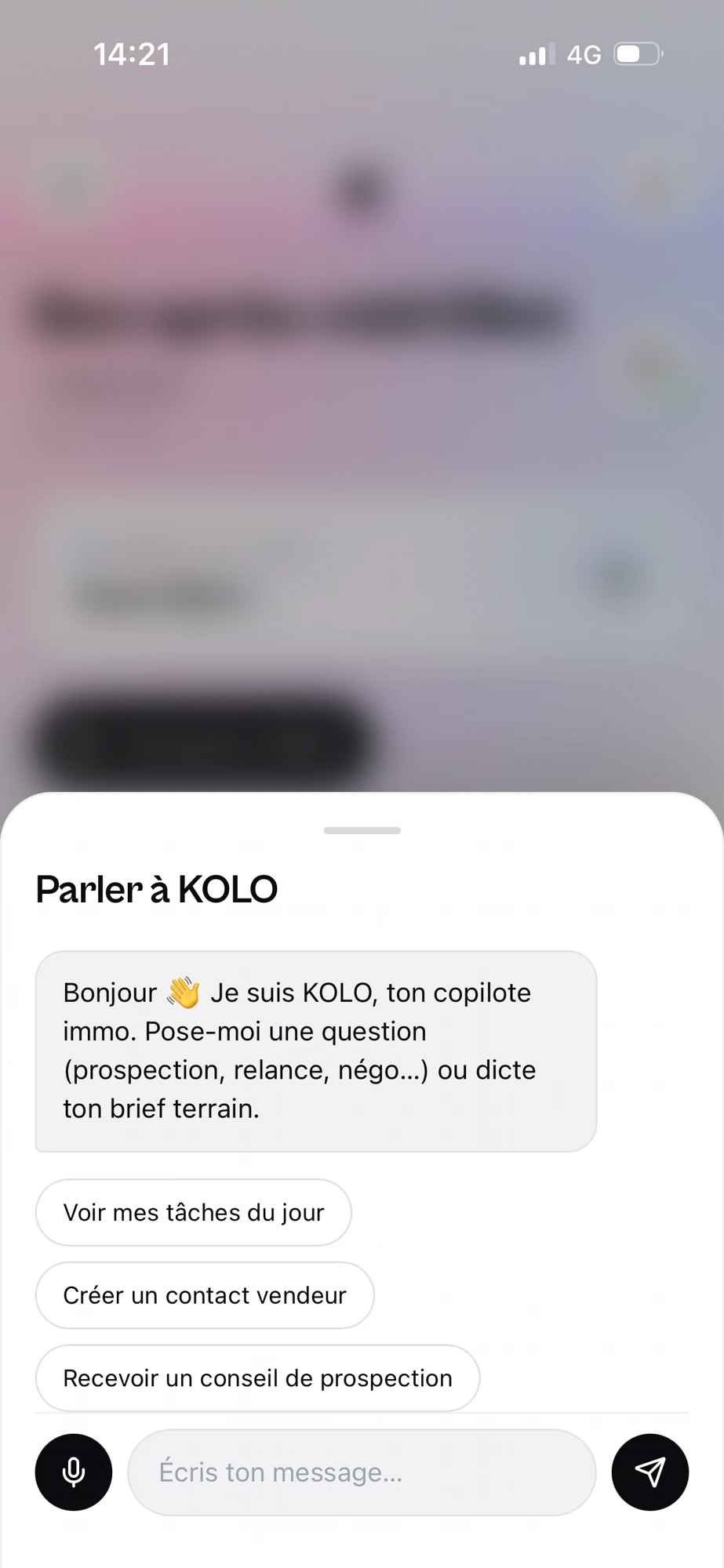
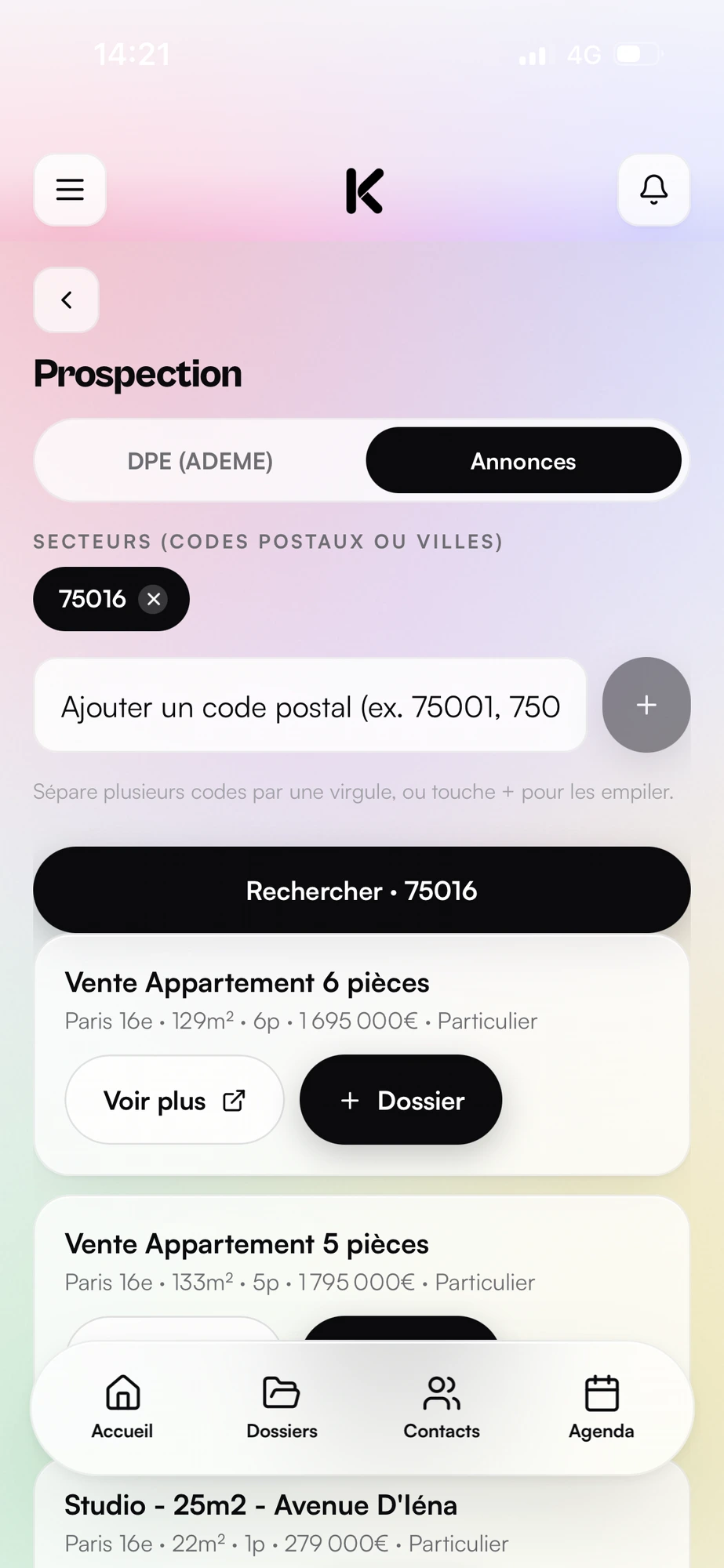
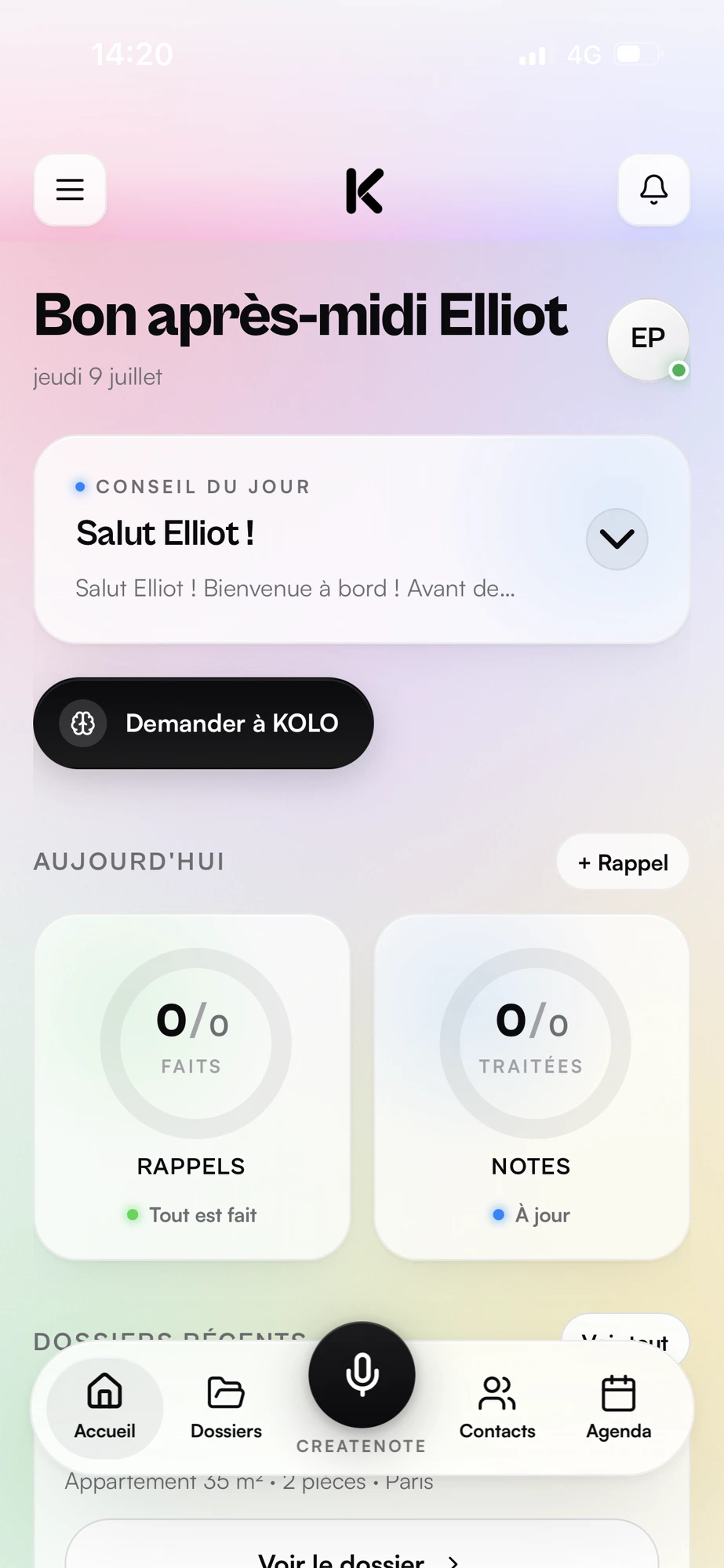
Plus de mandats signés. Moins d'heures perdues.
3 leviers. Zéro perte de temps.
L'essentiel de votre métier, dans une seule app.
Tous les mandats à saisir, en un coup d'œil.
Les 5 grands portails + tous les DPE émis dans votre secteur. Chaque projet de vente qui apparaît, vous le voyez avant les autres.
- Vue multi-portails en direct sur votre zone
- DPE émis = futurs vendeurs identifiés
- Alertes push sur les nouveaux biens
L'expert qui vous coache avant chaque R1.
Estimation DVF en 3 secondes, argumentaire de signature, réponse juridique. KOLO répond, en langage d'agent.
- Estimation basée sur les ventes DVF de l'immeuble et du quartier
- Stratégie de signature par prospect
- Relances suggérées automatiquement
Vos notes, votre agenda, vos dossiers. Ensemble.
Dictez une note vocale entre deux visites, KOLO la classe. Vos rappels, contacts et dossiers en cours sont au même endroit. Fini les 4 apps.
- Notes vocales entre deux rendez-vous
- Agenda et rappels synchronisés
- Chaque dossier suivi : mandat → visite → offre → signature
Deux plans. Zéro surprise.
Free pour tester. Pro quand vous voulez tout.
Pour tester KOLO sans sortir la carte bleue.
- 1 prospection IA par semaine
- 10 contacts max dans l'annuaire
- Agenda intégré
- Assistant intelligent (usage limité)
Prospection illimitée. DPE inclus. Tout, sans limite.
- Prospections IA illimitées
- Annuaire de contacts illimité
- Assistant intelligent illimité (DVF, juridique, coaching)
- Accès aux DPE de votre secteur
- Support prioritaire

Ex-agent immobilier dans deux grands réseaux, puis parcours dans la tech.
« J'ai été frappé par le manque d'outils vraiment pensés par des agents immo pour des agents immo. On a construit KOLO main dans la main avec des agents en réseau, mandataires et conseillers indépendants pour régler ce problème. »